Standard Print Sizes in Nigeria: Cards, Flyers, Banners
2 November 2026 · The Showcase Hub
Standard print sizes in Nigeria for business cards, flyers, invitations, roll-ups and flex banners, in mm, inches and feet, with bleed and safe areas.
Standard print sizes in Nigeria are 3.5 by 2 inches (89 by 51 mm) for business cards, A5 (148 by 210 mm) and A4 (210 by 297 mm) for flyers, 5 by 7 inches for invitations, 85 by 200 cm for roll-up banners, and flex banners sized in feet, commonly 3 by 6, 4 by 8 or 5 by 10. Add 3 mm of bleed on every edge of small-format artwork.
Nigerian printing mixes three measuring systems, and that is where most size mistakes start. Cards are spoken about in inches, paper in millimetres, banners in feet. A designer abroad sends a European card at 85 by 55 mm, the client expects a Lagos card at 3.5 by 2 inches, and somebody pays for a reprint. The tables below use all three units so nobody has to convert in their head.
What is the standard business card size in Nigeria?
The standard business card size in Nigeria is 3.5 by 2 inches, which is about 89 by 51 mm. The European size of 85 by 55 mm is also common, especially from designers who use international templates. Square cards and slim cards are popular for brands that want to stand out.
| Card | Inches | Millimetres | Notes |
|---|---|---|---|
| Standard | 3.5 x 2 | 89 x 51 | The usual Lagos size |
| European | 3.35 x 2.17 | 85 x 55 | Slightly shorter, slightly taller |
| Square | 2.5 x 2.5 | 64 x 64 | Memorable, does not fit every card holder |
| Slim | 3.5 x 1.5 | 89 x 38 | Minimal designs only |
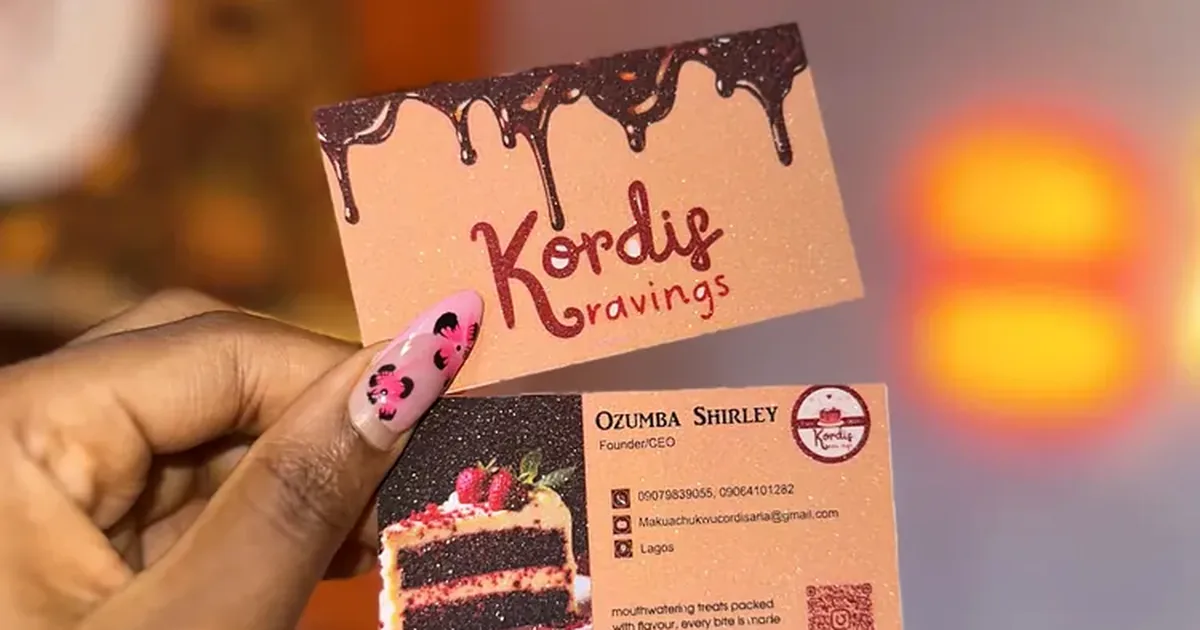
Tell your printer which one you mean. "Standard size" means different things to different designers. Board weight matters as much as size: most business cards print on 300 to 350 gsm board, and anything thinner feels like a flyer. The business cards we printed for Marron Events and Kordis Kravings are in our portfolio if you want to see finished examples.
Which standard print sizes in Nigeria suit flyers: A4, A5 or A6?
A4 is 210 by 297 mm, A5 is 148 by 210 mm and A6 is 105 by 148 mm. Each A size is exactly half the one above it, so two A5 flyers come from one A4 sheet and four A6 cards come from one A4.
| Size | Millimetres | Inches (approx.) | Common uses |
|---|---|---|---|
| A3 | 297 x 420 | 11.7 x 16.5 | Posters, menus on walls |
| A4 | 210 x 297 | 8.3 x 11.7 | Letterheads, price lists, full-page flyers |
| A5 | 148 x 210 | 5.8 x 8.3 | Flyers, programmes, menus, booklets |
| A6 | 105 x 148 | 4.1 x 5.8 | Postcards, thank-you cards, inserts |
| DL | 99 x 210 | 3.9 x 8.3 | Slim flyers, compliment slips, invitations |
A5 is the most-printed flyer size in Lagos because it is cheap to produce, fits in a hand and still has room for a picture and a message. Product inserts and thank-you cards that go inside packages are usually A6 or smaller, so they sit flat in a box or mailer.
What size are wedding invitations in Nigeria?
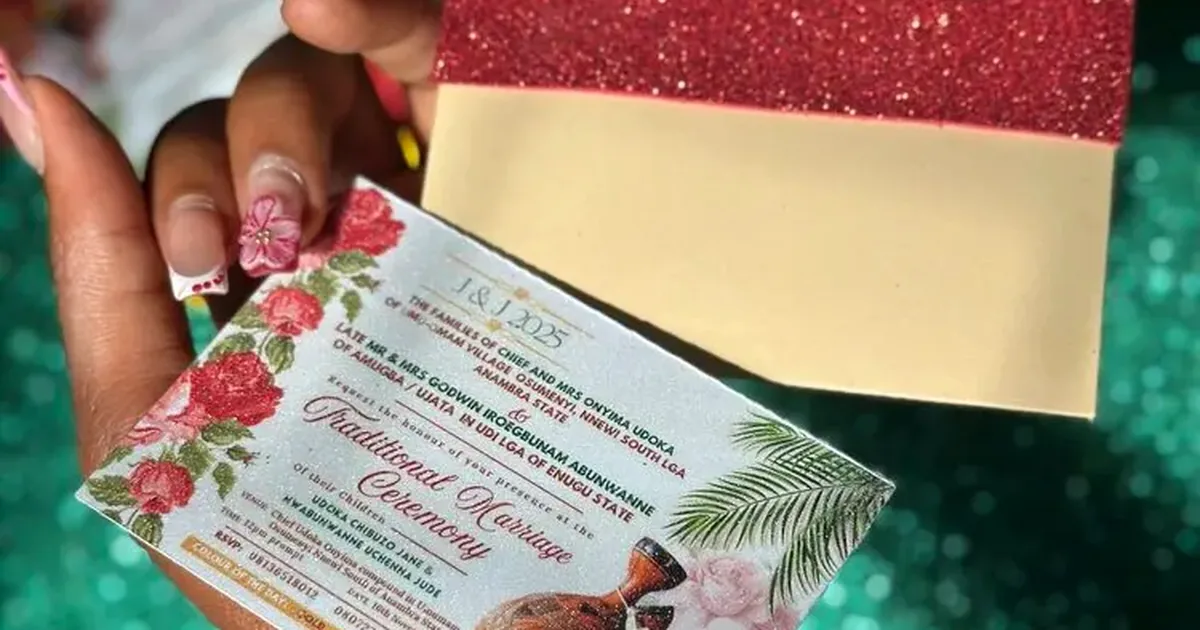
Wedding invitations in Nigeria are most often 5 by 7 inches (127 by 178 mm), with A5 and DL as the main alternatives. The size usually follows the envelope or box the invitation goes into, so choose that first.
Programmes for church services and receptions are usually A5 booklets. Meal tickets, table numbers and place cards are small and vary by design. Our wedding stationery guide covers which items to print and when to order them.
What is the standard roll-up banner size?
The standard roll-up banner size is about 85 cm wide by 200 cm tall, which is roughly 2.8 by 6.6 feet. Stands are also widely available at 80, 100 and 120 cm wide. The height is almost always around 200 cm, because that puts the message at eye level.
Two things catch people out:
- The bottom of a roll-up disappears into the base. Keep text and logos well above the lowest 10 to 15 cm, because the cassette that holds the banner hides part of it.
- The top is where people look. Logo and the one-line message go in the top third. Contact details go in the middle, at standing eye height. Nobody bends down to read a phone number.
What sizes do flex banners come in?
Flex banners in Nigeria are measured in feet, and can be made to almost any size. Common sizes are 3 by 6, 4 by 8 and 5 by 10 feet. Sizes like 2 by 4 feet suit shop doors and stands, while event backdrops can run to 8 feet tall and beyond.
Flex banners are usually hemmed at the edges and fitted with eyelets, the metal rings used to tie them up. So keep words and logos a few centimetres in from every edge. A banner that reads well on a laptop screen often fails outside: check that the main message is readable from five steps away.
| Viewing distance | Smallest letters that read comfortably |
|---|---|
| 3 metres (10 ft) | About 2.5 cm (1 inch) tall |
| 6 metres (20 ft) | About 5 cm (2 inches) tall |
| 15 metres (50 ft) | About 13 cm (5 inches) tall |
These are a sign-maker's rule of thumb, not a law. If people will read your banner from a moving car, go bigger.
What is bleed and how much do you need?
Bleed is colour or image extended past the line where the paper is cut, so that no white edge appears if the cut moves slightly. For cards, flyers, invitations and packaging, the standard bleed is 3 mm on every side. So an A5 flyer is set up at 154 by 216 mm.
Inside the cut line there is a safe area. Keep text and logos at least 3 to 5 mm inside the edge. Our print-ready artwork guide covers bleed, resolution and colour in more detail.
Frequently asked questions
Is A4 the same as letter size?
No. A4 is 210 by 297 mm. US letter size is 216 by 279 mm, slightly wider and shorter. Nigeria uses A4, so a document set up in letter size from an American template will not fit an A4 sheet exactly and may lose its margins.
What resolution should my artwork be?
Artwork for cards, flyers and packaging should be 300 dpi at the size it will print. Large banners can be lower, often 100 to 150 dpi at full size, because they are read from further away. A picture taken from WhatsApp is usually too small for either.
Can I print a non-standard size?
Yes. Any size can be printed, but standard sizes waste less paper, so they cost less and are easier to fit into envelopes, frames and holders. If you need an unusual size, ask for a quote before your designer starts.
What is the difference between a roll-up and an X-banner?
A roll-up banner rolls into its base for storage and pulls up onto a pole in seconds. An X-banner hangs on a cross-shaped frame behind it. Roll-ups look neater and protect the print between events. X-banners are lighter and simpler.
What paper weight is best for flyers?
Most flyers print on 115 to 170 gsm paper, where gsm means grams per square metre and a higher number is thicker. A flyer handed out on the street can be lighter. A menu or a price list that will be handled for weeks should be heavier, or laminated.
Get the size right before the design
Decide the size, the unit and the bleed before the designer opens a file, and write them in the brief. If you are not sure what size suits your use, send us what it is for and we will suggest one with the quote. For everything else your brand might print, start with our custom packaging guide.